Not-Really-Flat Table
What happens when a table stops being flat?
A furniture design exploration that moved from an adjustable desk mechanism to three sculptural concepts and a small 3D-printed model.
View final designs
Keep the purpose. Change the surface.
I began with a question prompted by an ordinary table: why does the surface have to be flat? My background in entrepreneurship had usually led me toward useful, viable solutions. In this course, I wanted to explore design and making more freely.
At first, I still approached the question through function. I compared tables, stands and holders through their material, shape, mobility and flexibility. Surface and adaptability became my starting lenses: a desk might change its form to accommodate different activities and objects.
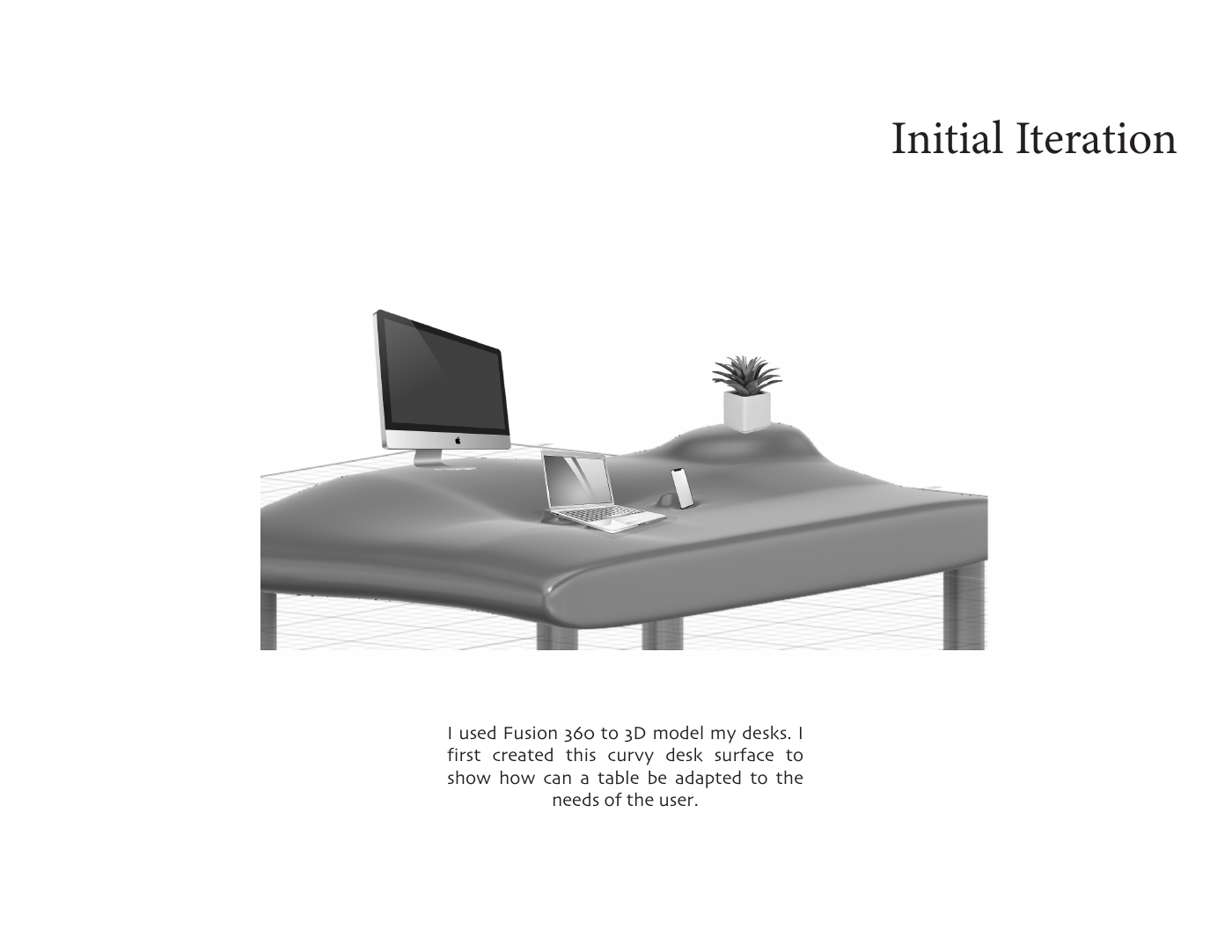
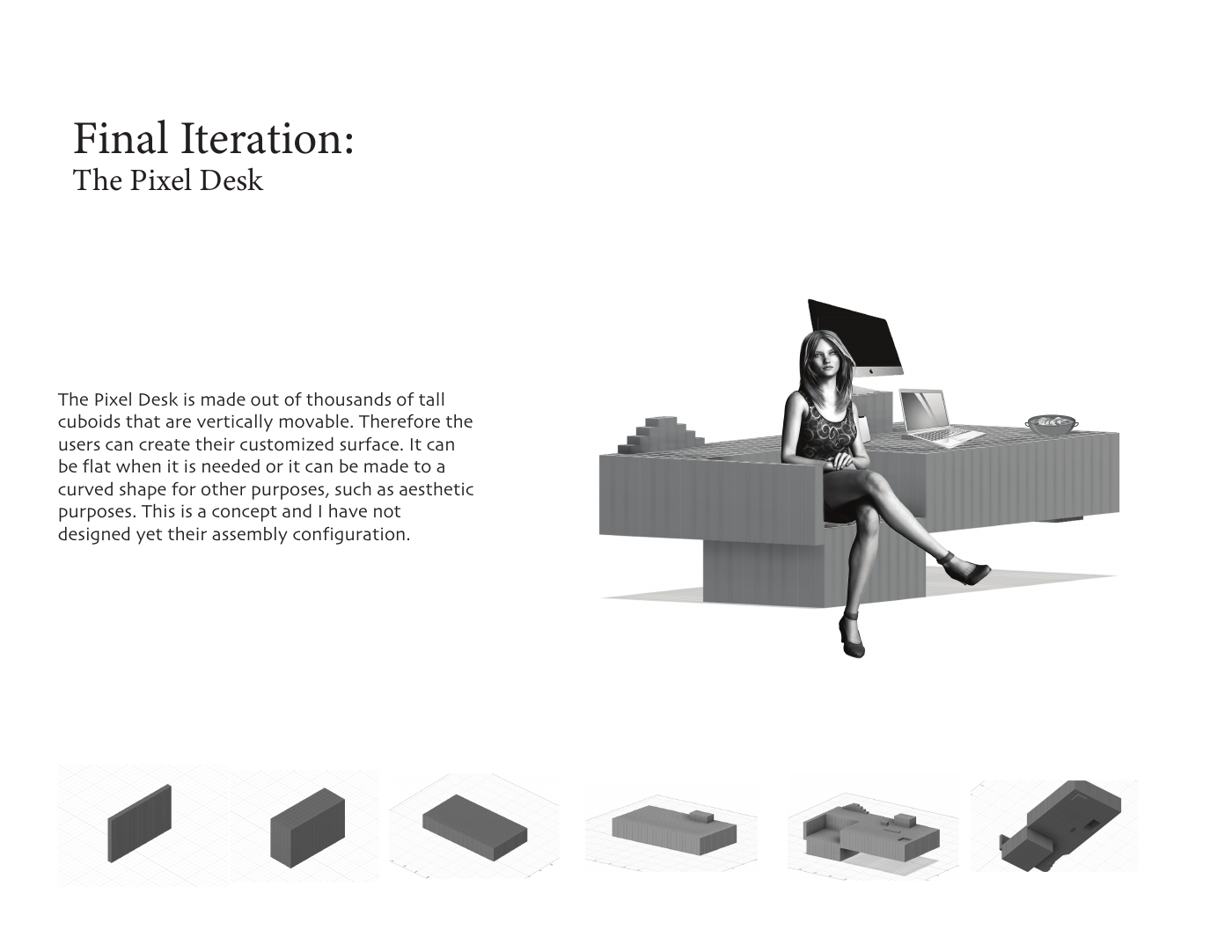
The Flexible Wall by Jeong Young Park and Mina Park was an inspiration for a surface that could change shape. I modeled a continuous curved desk in Fusion 360, then developed the Pixel Desk: many vertical elements that could form a flat or uneven surface.
A big mechanism became a small assembly.
The ambitious version imagined a touchscreen controlling the surface. For the course, I narrowed the making task to a few cubic elements and a simple manual assembly. I needed to explore how the pieces could hold together while sitting at different heights.
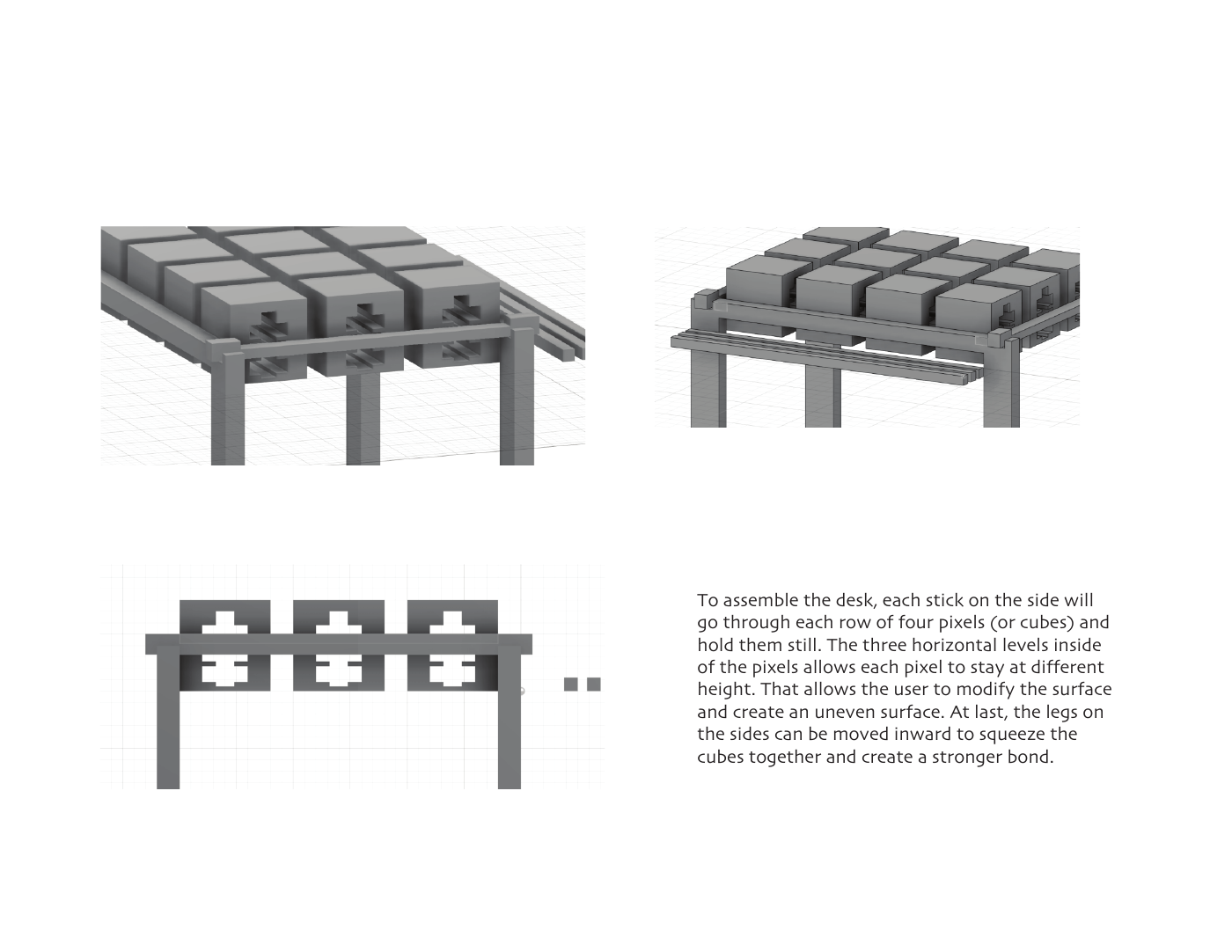
The model used rods passing through rows of cubes. Three internal levels provided different height positions; the side supports were intended to squeeze the cubes together. This was a proposed arrangement to fabricate, rather than a demonstrated adjustable desk.
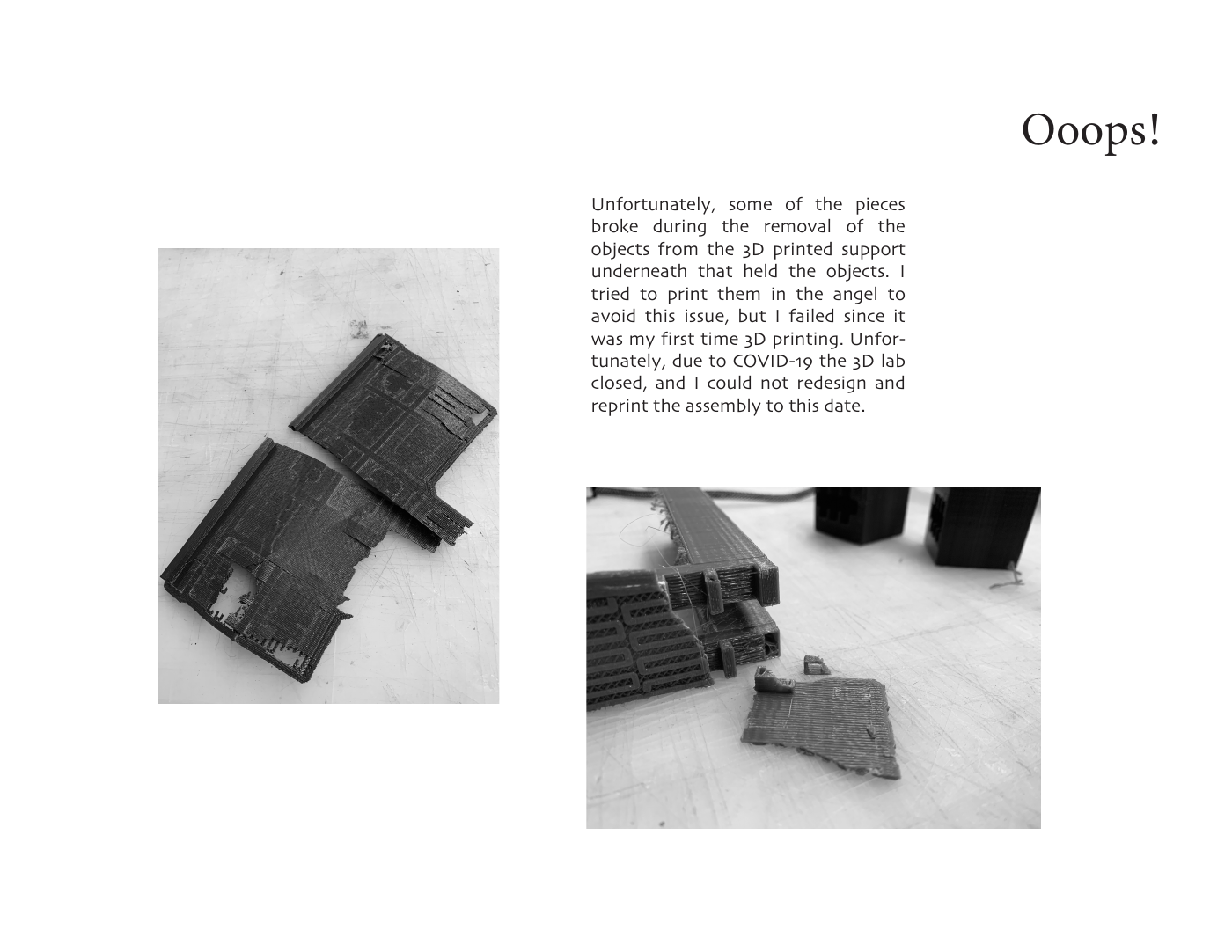
The first print exposed a practical failure: pieces broke while I removed them from their supports. An angled printing attempt did not resolve the problem. The process book records that the lab closed during COVID-19 before I could redesign and reprint that assembly.
I wanted more than an adaptable desk.
The engineering needed more resources, but that was not the only reason to change direction. I also felt the Pixel Desk was too predictable at first glance. I was interested in surprise and emotional response as much as practical utility.
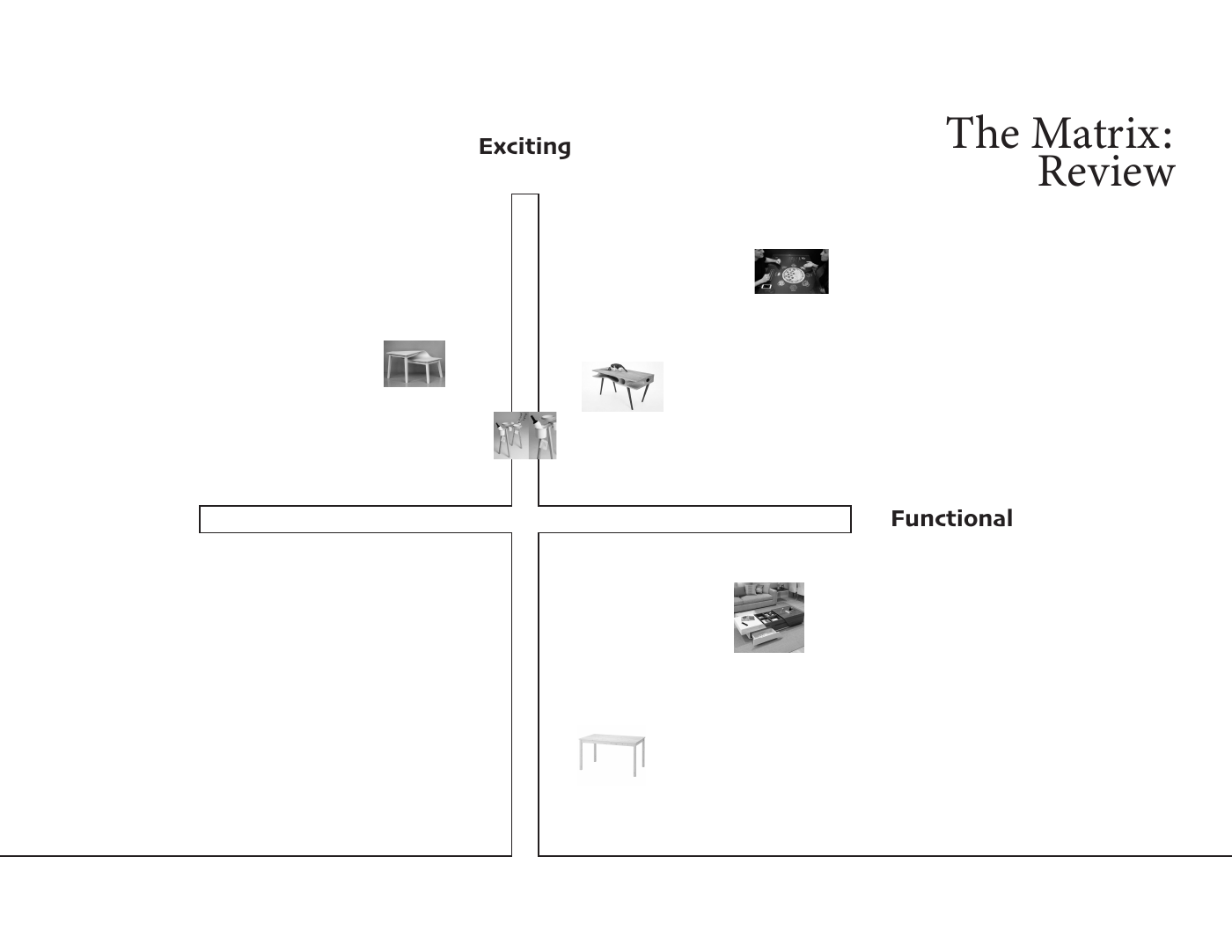
I returned to references and plotted tables against two qualities: functionality and how exciting I found them. The matrix was explicitly based on my own taste, not user research. It helped reveal the direction I wanted to pursue: objects that challenged the familiar definition of a table.
The new question allowed a different tradeoff. Instead of proving that every surface served an established need, I could use unusual forms to invite interpretation and explore possible uses.
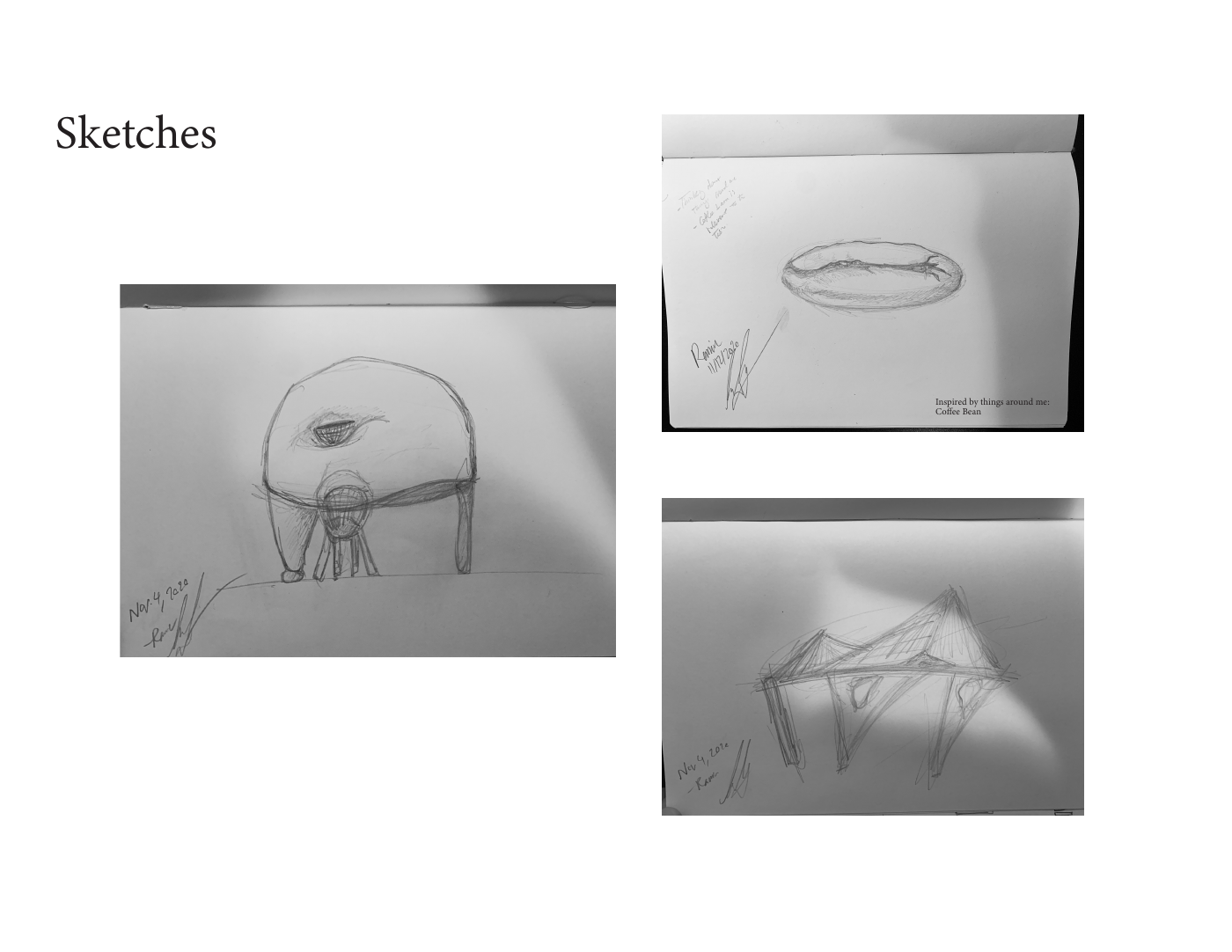
Three sculptural tables.
The sketches became three furniture concepts modeled in Fusion 360.


I 3D printed the Elephant to explore its form at a small scale. After the earlier assembly broke during support removal, I chose a print orientation and kept the support density low to make this model easier to remove.
See the print setupA model can reveal form. Scale changes meaning.
People had trouble recognizing the small Elephant print as a table. The model showed its shape and helped me practice fabrication. Evaluating whether someone could recognize and use it as furniture would require a full-size prototype.
Starting with an unfamiliar form opened up uses I hadn’t considered when I began with an adjustable desk. The recessed bowl rest and shared serving surface came from exploring the shapes themselves.